The Great Housing FlipWhy Existing Homes Now Outprice New Construction
By Chris Haro, Realtor, Keller Williams Realty. SC Real Estate License #79664. Last updated .
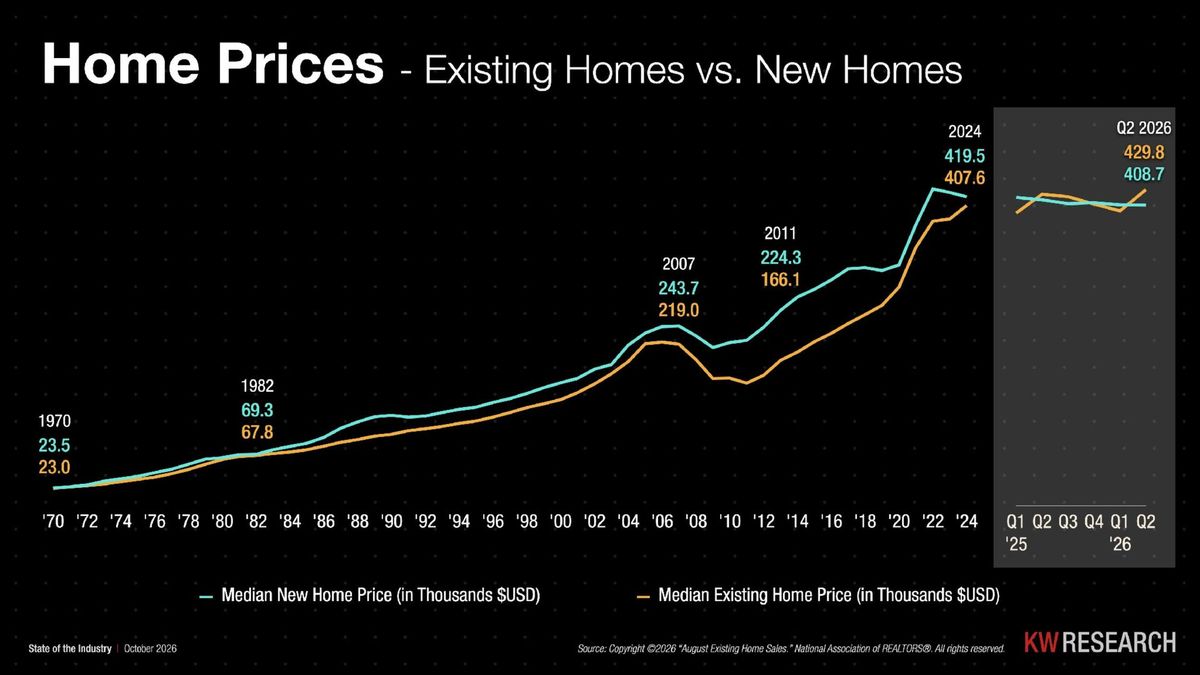
For over 50 years, new construction sold at a premium to existing homes. By Q2 2026 the median existing home ($429,800) costs $21,100 more than the median new home ($408,700).
For decades, real estate operated on an unspoken baseline rule: new construction carried a premium price tag. If you wanted brand-new finishes, pristine rooflines, and modern architectural layouts, you paid more for them. Established homes, while boasting character and location, were expected to sell at a discount relative to shiny new builds.
Industry data reveals that this long-standing market dynamic has officially inverted.
What the Numbers Show
According to historical data tracked by the National Association of REALTORS® (NAR) and compiled by KW Research, new construction maintained a steady pricing premium over existing homes for over 50 years:
- 1970: New Median $23.5k vs. Existing Median $23.0k
- 1982: New Median $69.3k vs. Existing Median $67.8k
- 2007: New Median $243.7k vs. Existing Median $219.0k
- 2011: New Median $224.3k vs. Existing Median $166.1k
- 2024: New Median $419.5k vs. Existing Median $407.6k
By Q2 2026, the trajectory flipped:
- Median Existing Home Price: $429,800
- Median New Home Price: $408,700
Existing home median values are now $21,100 higher than new builds.
Why the Shift Happened
1. Home Builders Are Pivot-Pricing for Affordability
With elevated mortgage rates compressing buyer purchasing power, national home builders have had to adapt quickly. To move standing inventory and keep production lines moving, builders have reduced home square footage, cut lot sizes, trimmed luxury specs, and offered aggressive financial incentives such as rate buydowns and closing-cost credits.
2. The "Lock-In Effect" Constrains Resale Supply
Existing homeowners locked into 3%-4% mortgage rates have been reluctant to list their properties. This tight inventory environment creates sustained price support for existing homes. Resale sellers aren't under corporate quarterly pressure to unload inventory, keeping existing home values firm.
3. Established Value Premium
Buyers are recognizing the true cost of "unfinished" new homes. Beyond the sticker price, new builds often lack mature landscaping, fencing, window treatments, upgraded outdoor spaces, and established locations near core infrastructure—amenities already built into existing properties.
What This Means for Today's Resellers
While existing home prices remain resilient, resale sellers are competing against builder pricing strategies. When buyers can purchase a new construction home at a median price point lower than an existing home, sellers must focus on strategic positioning:
- Highlight Immediate Utility: Focus marketing on turn-key features that new builds lack. Mature trees, truly private yards, custom hardscaping, and established neighborhood communities can all add value to the right buyer.
- Account for Post-Closing Expenses: Clearly illustrate the out-of-pocket savings your home offers versus a builder's base model (which often requires thousands in post-closing additions).
- Data-Driven Positioning: In a market where builders can incentivize dynamically adjusted prices, resellers of existing homes have to fight to stay on the short list. Precise pricing grounded in local market data is critical to standing out.
Have a question about your move?
Tell Chris what you are planning and he will give you a straight answer.